Here's a link to the entirety of the generator report:
http://www-personal.umich.edu/~stvdwtt/FinalReportV7.docx

Students designing a low cost, sustainable surgical lamp for developing countries
Tuesday, February 1, 2011

Monday, January 31, 2011
Lamp Head Designs
Hey guys,
Here are some of the designs I came up with. Any suggestions/ideas??
- Elliot -


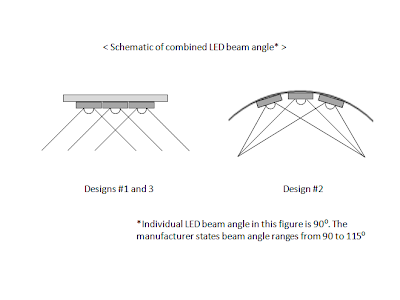
LED Specs from the manufacturer:
CREE High Power - Tao source of an electronic agent. CREE High Power Products:
1.cree high power led Q5 is white, the color temperature :5700-7000K (WC, WD, WF, WG) Model: XREWHT-L1-Q5 cree led warm white temperature :2600-3700K, warm white natural :3700-5000K, other colors, red, green, blue, yellow. Model: XRE, XRC, XPE, XPC, MCE series.
2. Luminous flux of up to 114LM / W.
3. The normal working current: 350mA-700mA, 700mA at work when the flux is 1.65 times the work of 350mA maximum support, 1000mA
4. Typical voltage 3.2V (350Ma), 3.5V (700mA)
5. CLASS II,> 2000V
6. Typical viewing angle 90 °, 110 °, 115 °
7.1000 is less than small-time decline 0.5% (350mA, Ta = 25 degrees,)
8.50000 small-time decline of less than 30% (350mA, Ta = 25 degrees,)
9. Meet the ROHS requirements.
10. Thermal resistance within the lowest in the industry: 8 ℃ / W
11. The world's leading JEDEC standards for pre-test
12. Can be reflow line-JEDEC, J-STD-020C standard,
13. Cooling section is not electrically charged.
14. To provide tailor-made aluminum plate (special specifications) tailor-made, (ie, zone plate) LED reflow processing and other supporting services.
15. Application: LED lamps, automotive lighting, stage lighting, mobile phone backlight, architectural lighting, solar lighting, military flashlight; to provide tailor-made aluminum plate (special specifications) tailor-made, (ie, zone plate) LED reflow processing and other support services .
Here are some of the designs I came up with. Any suggestions/ideas??
- Elliot -


LED Specs from the manufacturer:
CREE High Power - Tao source of an electronic agent. CREE High Power Products:
1.cree high power led Q5 is white, the color temperature :5700-7000K (WC, WD, WF, WG) Model: XREWHT-L1-Q5 cree led warm white temperature :2600-3700K, warm white natural :3700-5000K, other colors, red, green, blue, yellow. Model: XRE, XRC, XPE, XPC, MCE series.
2. Luminous flux of up to 114LM / W.
3. The normal working current: 350mA-700mA, 700mA at work when the flux is 1.65 times the work of 350mA maximum support, 1000mA
4. Typical voltage 3.2V (350Ma), 3.5V (700mA)
5. CLASS II,> 2000V
6. Typical viewing angle 90 °, 110 °, 115 °
7.1000 is less than small-time decline 0.5% (350mA, Ta = 25 degrees,)
8.50000 small-time decline of less than 30% (350mA, Ta = 25 degrees,)
9. Meet the ROHS requirements.
10. Thermal resistance within the lowest in the industry: 8 ℃ / W
11. The world's leading JEDEC standards for pre-test
12. Can be reflow line-JEDEC, J-STD-020C standard,
13. Cooling section is not electrically charged.
14. To provide tailor-made aluminum plate (special specifications) tailor-made, (ie, zone plate) LED reflow processing and other supporting services.
15. Application: LED lamps, automotive lighting, stage lighting, mobile phone backlight, architectural lighting, solar lighting, military flashlight; to provide tailor-made aluminum plate (special specifications) tailor-made, (ie, zone plate) LED reflow processing and other support services .
Wednesday, January 26, 2011
Generator Report
Below is the executive summary from our final report for the generator. I am unsure on how to attach the entire report, which including the appendices and table of contents is about 45 pages long. I have it in both Microsoft word and pdf format. If anyone knows how to upload a pdf or word document please let me know. I can also email it to people individually.
-Liz
The purpose of this report is to present our findings regarding our manually powered generator design for charging cellphone batteries to M-Heal, the student organization we collaborated with. This report presents our prototype design and prototype tests. Because our prototype design did not generate enough electricity to charge the cellphone batteries, our report also discusses changes that should be made to our generator design in order to successfully charge cellphone batteries.
M-Heal had previously designed a surgical lamp which operated using cellphone batteries in order to provide reliable lighting in Ugandan operating rooms. Currently, the cellphone batteries must be charged using electricity from a power grid; unfortunately, Uganda’s power grids are unreliable. Consequently, a surgeon can be left without lighting during surgery.
Our solution was to design a manually powered generator that could charge the ten cellphone batteries. As part of our task, we followed the criteria established by M-Heal as well as criteria we devised after considering the problem. These criteria included using sustainable parts, ease of construction, and ease of operation.
The main parts of our generator prototype were obtained from used automobiles, cellphones, and bicycles. Our research indicated that these used devices are available in Uganda and allow our design to be constructed and maintained in Uganda. Our prototype design consisted of three main components, the generator, the circuit system, and the stand. The circuit system contained two circuits; the first circuit used the energy our generator produced to charge a car battery and the second circuit charged the cellphone battery using the stored electricity in the car battery.
Prototype testing revealed that the amount of electricity we generated was insufficient to charge the cellphone batteries. From the results of our voltage test, we concluded that the voltage that our prototype produced was too low to charge the car battery. Because we could not charge the car battery, we were unable to charge the cellphone batteries.
Based on our research and tests, we have devised several design improvements. These recommendations are mainly concerned with the electricity output of our generator. We propose to optimize the AC voltage produced by our generator by adding more magnets to the wheel, moving the steel core closer to the bicycle wheel, and adding more wire coils to the core. In order to prevent the high voltage losses after rectification, we also suggest using a more efficient rectifier.
While we did not meet our criteria of charging ten cellphone batteries, we did create a working generator out of parts which are sustainable materials in Uganda. We recommend that a future team continues our work and improves the design of our generator in order to successfully charge the cellphone batteries.
Meeting Summary 1/24
Hi everybody,
Today's lamp meeting was just a overview of the project for our new team members and some general brainstorming. The major goals of this semester will be to build a new lamp head, build a new generator prototype, and create a more specific business plan. We need to have the next prototype ready to send with the Nicaragua team for their trip in June.
Action Items:
Liz: Post a summary of the engin 100 generator project on the blog
Melissa: Learn about the physics of generators
Pat: Think of reasons why the current generator prototype isn't very efficient
Elliot: Draw up two designs for the lamp head
The Lamp Team Blog:
Here's the url for the lamp team blog. If you have any interesting ideas or see any interesting articles please post on it. You should also post the results of whatever action items you're working on between meetings. The url for the blog is http://mheal-lamp.blogspot.com/.
Survey Team Lamp Results:
The results from the survey team's surveys are attached to the email I sent out today. If you haven't read them over yet I suggest doing so.
Next Week:
The next lamp team meeting will be on Tuesday directly after the M-HEAL general body meeting (so around 8pm), once again in the project room. We will look at the waveforms of the current generator and discuss improvements to the design. We will also discuss new head designs.
Today's lamp meeting was just a overview of the project for our new team members and some general brainstorming. The major goals of this semester will be to build a new lamp head, build a new generator prototype, and create a more specific business plan. We need to have the next prototype ready to send with the Nicaragua team for their trip in June.
Action Items:
Liz: Post a summary of the engin 100 generator project on the blog
Melissa: Learn about the physics of generators
Pat: Think of reasons why the current generator prototype isn't very efficient
Elliot: Draw up two designs for the lamp head
The Lamp Team Blog:
Here's the url for the lamp team blog. If you have any interesting ideas or see any interesting articles please post on it. You should also post the results of whatever action items you're working on between meetings. The url for the blog is http://mheal-lamp.blogspot.com/.
Survey Team Lamp Results:
The results from the survey team's surveys are attached to the email I sent out today. If you haven't read them over yet I suggest doing so.
Next Week:
The next lamp team meeting will be on Tuesday directly after the M-HEAL general body meeting (so around 8pm), once again in the project room. We will look at the waveforms of the current generator and discuss improvements to the design. We will also discuss new head designs.
Tuesday, November 9, 2010
Hey guys, sorry about the long time since the last update. There's alot of important updates in this so make sure to read all of it carefully.
I. No meeting this week
II. Dev Day
III. Emerging Markets Club collaboration
IV. NCIIA Grant
I. Dev Day:
As all of you know, this Sunday in Dev Day. Ram will be sending out the schedule in the next two days. Please let me know if you'll be coming so I can get a headcount. We need to decide what we're going to do during the group work time. Originally I had hoped that we could work on the optics setup but it doesn't look like we'll be getting those parts in time. Some of the time will be spent going over the NCIIA grant, modifying it for this semester's submission. We'll also spend some time talking with the Nicaragua team about about adding a light to the pelvic exam table. We can talk about the light fixture, but I don't know how much of that we can do without having the lighting parts on hand. Please send out ideas of other areas that need work.
II. No meeting this week:
Since M-HEAL is monopolizing your Sunday, I'm canceling Thursday's meeting.
III. Emerging Markets Club collaboration:
Today I met with two people from the B-School's EMC. They are going to be assigning two MBA students to our team from now until the end of February. Tentatively we'll be meeting with them sometime next week.
IV. NCIIA Grant:
The next deadline for the NCIIA E-Teams grant is Dec. 3rd. We stand a pretty good chance to get it this year if we can beef up our business plan. Hopefully the EMC students will be able to help us with that, although the members I talked to today thought that could be coming up too soon. I'm planning to set up meetings with Moses Lee and Kathleen Sienko, let me know if you're interested in attending.
Steve
I. No meeting this week
II. Dev Day
III. Emerging Markets Club collaboration
IV. NCIIA Grant
I. Dev Day:
As all of you know, this Sunday in Dev Day. Ram will be sending out the schedule in the next two days. Please let me know if you'll be coming so I can get a headcount. We need to decide what we're going to do during the group work time. Originally I had hoped that we could work on the optics setup but it doesn't look like we'll be getting those parts in time. Some of the time will be spent going over the NCIIA grant, modifying it for this semester's submission. We'll also spend some time talking with the Nicaragua team about about adding a light to the pelvic exam table. We can talk about the light fixture, but I don't know how much of that we can do without having the lighting parts on hand. Please send out ideas of other areas that need work.
II. No meeting this week:
Since M-HEAL is monopolizing your Sunday, I'm canceling Thursday's meeting.
III. Emerging Markets Club collaboration:
Today I met with two people from the B-School's EMC. They are going to be assigning two MBA students to our team from now until the end of February. Tentatively we'll be meeting with them sometime next week.
IV. NCIIA Grant:
The next deadline for the NCIIA E-Teams grant is Dec. 3rd. We stand a pretty good chance to get it this year if we can beef up our business plan. Hopefully the EMC students will be able to help us with that, although the members I talked to today thought that could be coming up too soon. I'm planning to set up meetings with Moses Lee and Kathleen Sienko, let me know if you're interested in attending.
Steve
Thursday, October 14, 2010
Lamp Update: 10/14
Here's this week's lamp update:
I. Tonight's Meeting
II. Next Week's Meeting
III. Engin 100 Team
IV. Business Team
V. M-HEAL Dev Day - 10/30
-----------------------------------------------
I. Tonight's Meeting:
Tonight we had a very productive meeting. We started off discussing requirements for generator the Engin 100 team is designing/building for us. Then we moved the prototype from the LBME storage area to the Wilson Center. Jack finished up the base and put some adjustable feet on it. Mike worked on the vertical to horizontal joint. Elliot made a stopper that prevents the wheel from turning and I attached a new counterweight bar (the old one was pretty wobbly). The lamp is looking great and is much sturdier than it was last meeting.
II. Next Week's Meeting:
Next week we'll be meeting on Thursday at 8 at the Wilson Center. The primary focus will be on fixing the locking mechanism. Depending on when the lighting parts come in, we may begin working on the electrical system. Otherwise we'll just be generally diagnosing and fixing problems with the current prototype (primarily looking for stability issues).
III. Engin 100 Team:
Patrick and Ram (the M-HEAL VP) will be meeting with the Engin 100 team tomorrow afternoon to discuss the basics of the project with them. Patrick, please send an email to the list to tell us how it goes.
IV. Business Team:
M-HEAL is partnering with the B-school's Emerging Markets Club (EMC) and two MBA students will be joining our team. Hopefully I'll be meeting with them next Wednesday to get an idea of how this will work. I'll keep you posted.
V. M-HEAL Dev Day:
M-HEAL Development Day has been moved to October 30th due to a Solid Works workshop on the 23rd. We'll be starting around 10am with a pancake breakfast and finishing with dinner around 7 (so you have plenty of time to get home/to the bar for the 8pm game).
As always let me know if you have any questions, comments, or ideas. Also, if you come across anything interesting please post it on the blog.
Steve
I. Tonight's Meeting
II. Next Week's Meeting
III. Engin 100 Team
IV. Business Team
V. M-HEAL Dev Day - 10/30
-----------------------------------------------
I. Tonight's Meeting:
Tonight we had a very productive meeting. We started off discussing requirements for generator the Engin 100 team is designing/building for us. Then we moved the prototype from the LBME storage area to the Wilson Center. Jack finished up the base and put some adjustable feet on it. Mike worked on the vertical to horizontal joint. Elliot made a stopper that prevents the wheel from turning and I attached a new counterweight bar (the old one was pretty wobbly). The lamp is looking great and is much sturdier than it was last meeting.
II. Next Week's Meeting:
Next week we'll be meeting on Thursday at 8 at the Wilson Center. The primary focus will be on fixing the locking mechanism. Depending on when the lighting parts come in, we may begin working on the electrical system. Otherwise we'll just be generally diagnosing and fixing problems with the current prototype (primarily looking for stability issues).
III. Engin 100 Team:
Patrick and Ram (the M-HEAL VP) will be meeting with the Engin 100 team tomorrow afternoon to discuss the basics of the project with them. Patrick, please send an email to the list to tell us how it goes.
IV. Business Team:
M-HEAL is partnering with the B-school's Emerging Markets Club (EMC) and two MBA students will be joining our team. Hopefully I'll be meeting with them next Wednesday to get an idea of how this will work. I'll keep you posted.
V. M-HEAL Dev Day:
M-HEAL Development Day has been moved to October 30th due to a Solid Works workshop on the 23rd. We'll be starting around 10am with a pancake breakfast and finishing with dinner around 7 (so you have plenty of time to get home/to the bar for the 8pm game).
As always let me know if you have any questions, comments, or ideas. Also, if you come across anything interesting please post it on the blog.
Steve
Thursday, October 7, 2010
Lamp Update 10/7
Hey everybody, here's this week's lamp update.
I. Tonight's Meeting
II. Assorted News
III. Blog
IV. Action Items
V. Next Week's Meeting
VI. M-HEAL Dev Day - 10/23
VII. M-HEAL Mass Meeting 10/12
-----------------------------------------------
I. Tonight's Meeting:
Tonight Mike Harrison and I went to the Wilson Center and worked on a new horizontal to vertical joint. The joint on the current prototype is a bit wobbly because we had to cut up the steering column to to attach it to the vertical pole. The new joint has a couple inches of the bike's crossbars left on it so we can use those to attach it to the vertical pole without interfering with the steering column.
II. Assorted News:
An Engin 100 team will be developing a human-powered generator for us to be completed by the end of the semester. I'll be meeting with them in the next week or so to discuss the project. Let me know if you want to mentor them or assist in mentoring them. Tomorrow I'll be going to a meeting about integrating business students into M-HEAL projects. The meeting is at 5pm in 2185 LBME. If you are interested in the business side of the lamp design you are welcome to come. Last week I emailed John Barrie at ATC about getting LEDs from him but still haven't heard back. I'll let you know when something develops on that end. The next round of NCIIA grant applications is due in early December so soon we'll need to start working on our submission.
III. Blog:
The lamp team has a blog that all of you are welcome to post on. Please post any work you do between meetings so everyone can be updated to any developments. Likewise if you are running into any problems post them on the blog so that other people can help you out. The url for the blog is http://mheal-lamp.blogspot.com/.
IV. Action Items:
New team members: Read our previous NCIIA grant application (attached) and get Wilson Center training
Mike W: Talk to John Barrie about the LEDs. Evidently he doesn't respond to my emails. Move the lamp prototype to the student group office.
Old team members: Read section 4.3 in Abigail's thesis and post your thoughts on the blog.
V. Next Week's Meeting:
Next week we'll be meeting in LBME at 8pm as usual. After some brief updates we'll break up into two groups. One group will go to the Wilson Center and put the new joint on the prototype. They will also figure out how to prevent the wheel from turning and will assess the performance of the current locking mechanism. The second group will develop a list of specs for the Engin 100 team and discuss the interface between the lamp and the generator.
VI. M-HEAL Development Day:
This semester's Dev Day will be October 23. Dev Day is an all day M-HEAL event where the design teams work on their projects and periodically break up to brainstorm with people from other teams on how each project could be improved. During last semester's Dev Day we made a ton of progress and (at least I) had a ton of fun (and free food). That Saturday is a bye week, so you don't have to worry about missing the football game. Stay tuned for more details.
VII. M-HEAL Mass Meeting 10/12:
The next M-HEAL mass meeting is next Tuesday. Frank Anderson, MD will be talking about infant and maternal health issues in Ghana; it should be a fascinating meeting.
As usual, let me know if you have any questions or comments.
See you at the M-HEAL mass meeting!
Steve
Subscribe to:
Posts (Atom)